
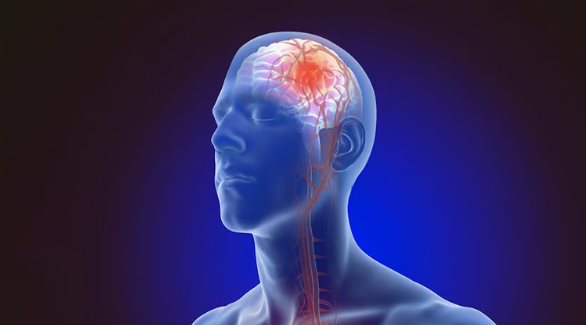
A brain haemorrhage is bleeding inside the brain or between the brain and the skull, and sudden symptoms need emergency hospital care straight away. Treatment depends on where the blood is and how much there is: some bleeds are managed with close monitoring and medicines, while others need urgent surgery to remove the clot or relieve pressure.
If a family member in Lahore has suddenly become drowsy, weak on one side or has a severe headache, do not wait for a clinic appointment. Go to the nearest emergency department.
Call an ambulance or go directly to hospital. A CT scan is the key test and should be done as soon as possible.
"Brain haemorrhage" covers several types of bleeding:
Bleeding directly into the brain tissue, most often caused by long-standing high blood pressure. It can also result from blood thinners, abnormal vessels or tumours.
Bleeding into the space around the brain, often from a ruptured aneurysm. It usually causes a sudden thunderclap headache. See brain aneurysm treatment for more detail.
Bleeding between the skull and its tough outer lining, usually after a head injury with a skull fracture. A person may appear fine at first and then deteriorate quickly, so urgent surgery may be needed.
An acute subdural follows significant head injury. A chronic subdural haematoma develops slowly over weeks, typically in older adults or those on blood thinners, sometimes after a minor bump that was forgotten. It may cause gradual confusion, headache, unsteadiness or weakness, and is often mistaken for dementia or stroke.
Not every stroke is a bleed. Most strokes are ischaemic, caused by a blocked artery, and are treated differently; see our stroke page for that.
Common causes include uncontrolled high blood pressure, head injury (road accidents and falls), blood-thinning medicines, ruptured aneurysms, arteriovenous malformations, bleeding disorders, and in older people, age-related fragility of blood vessels. Alcohol misuse and smoking increase risk.
A CT scan of the head shows bleeding quickly and is the first test. Depending on the findings, a CT angiogram or DSA may look for an aneurysm or abnormal vessels, and an MRI may help find an underlying cause. Blood tests check clotting, especially for patients on blood thinners.
Many small bleeds do not need an operation. Treatment focuses on controlling blood pressure, reversing blood thinners, preventing seizures, managing swelling and close neurological monitoring, often in intensive care. Repeat CT scans check whether the bleed is stable.
Chronic subdural haematomas, which become liquid over time, are commonly treated by making one or two small holes in the skull to wash out the old blood. A drain may be left for a day or two. This often brings rapid improvement in confusion or weakness, though some patients need a repeat procedure.
For extradural haematomas, acute subdural haematomas and some large intracerebral bleeds causing pressure, a craniotomy is performed to remove the clot and stop the bleeding. In severe brain swelling, part of the skull may be left off temporarily (decompressive craniectomy) and replaced later.
When bleeding blocks the flow of spinal fluid and causes hydrocephalus, a thin tube is placed into the fluid space of the brain to drain fluid and measure pressure. This is common after subarachnoid haemorrhage and bleeding into the ventricles.
If an aneurysm or AVM caused the bleed, it is treated to prevent re-bleeding, through surgery or endovascular methods. Our vascular neurosurgery page explains how these teams work together.
Surgery is considered when a bleed is large, causes pressure or shift of the brain, when the patient's consciousness is falling, when a chronic subdural is causing symptoms, or when hydrocephalus develops. Deep bleeds in elderly patients with poor overall condition are sometimes best managed without surgery. These decisions are made urgently with the family, based on scans and examination.
Recovery varies more with this condition than almost any other. After burr hole drainage for chronic subdural, many patients go home within a few days to a week. After craniotomy or a large bleed, intensive care and hospital stays of one to several weeks are common, followed by rehabilitation with physiotherapy, speech therapy and help with daily activities. Improvement can continue for many months. Long-term blood pressure control is essential to reduce the chance of another bleed.
Risks include re-bleeding, recurrence of a subdural collection, infection, seizures, brain swelling, stroke, blood clots in the legs and anaesthetic complications. In very severe bleeds, survival and recovery may be limited despite treatment, and this is discussed honestly with families.
For follow-up after a bleed or review of a chronic subdural, see a neurosurgeon and book an appointment with Dr. Khawar Anwar. In an emergency, always go to hospital first.
Yes, many small bleeds are absorbed by the body over weeks with careful medical treatment and monitoring. Surgery is reserved for bleeds causing pressure or deterioration.
It could be a chronic subdural haematoma, especially if he takes blood thinners. He should have a CT scan promptly.
They are usually stopped and reversed at the time of the bleed. Whether and when to restart them is a careful decision made with the treating doctors.
It ranges from days to many months depending on the size and type of bleed and the patient's age and health. Rehabilitation helps many patients regain function.
It can. Controlling blood pressure, treating any underlying aneurysm or AVM, and avoiding falls and alcohol reduce the risk.
Dr. Khawar Anwar is a Consultant Neurosurgeon & Spine Surgeon at PINS / Lahore General Hospital, Lahore, with over 10 years of experience in brain and spine surgery. He sees patients in Lahore and Gujranwala and focuses on minimally invasive and endoscopic techniques where they are suitable for the patient.
See the full list on the certifications page or read more about Dr. Khawar Anwar.
See all clinics, maps and timings on the locations page.
To book, call or WhatsApp 0333-7574732 and tell us which clinic and day suits you. Please bring your MRI or CT scan (films and CD), reports and a list of your current medicines to the consultation. For sudden weakness, loss of bladder or bowel control, a sudden severe headache or a head or spine injury, go to the nearest emergency department first.